Practical FX continuity means keeping an effect’s condition and behaviour consistent with the story across shots. Record its starting state, the action that changes it and the state left afterwards. Then plan how to return to each one. A spectacular first take is less useful if the following close-up belongs to a different version of the scene.
Watch the original demonstration
Watch the original episode, then use the written guide to plan your own version. Older episodes may include extra demonstrations or reviews.
1,000 Litres of Fake Blood: Blood Spray Test Run (Behind The Scenes)
A behind-the-scenes blood-spray test before the shoot. This is an archive test, rather than a small beginner recipe.
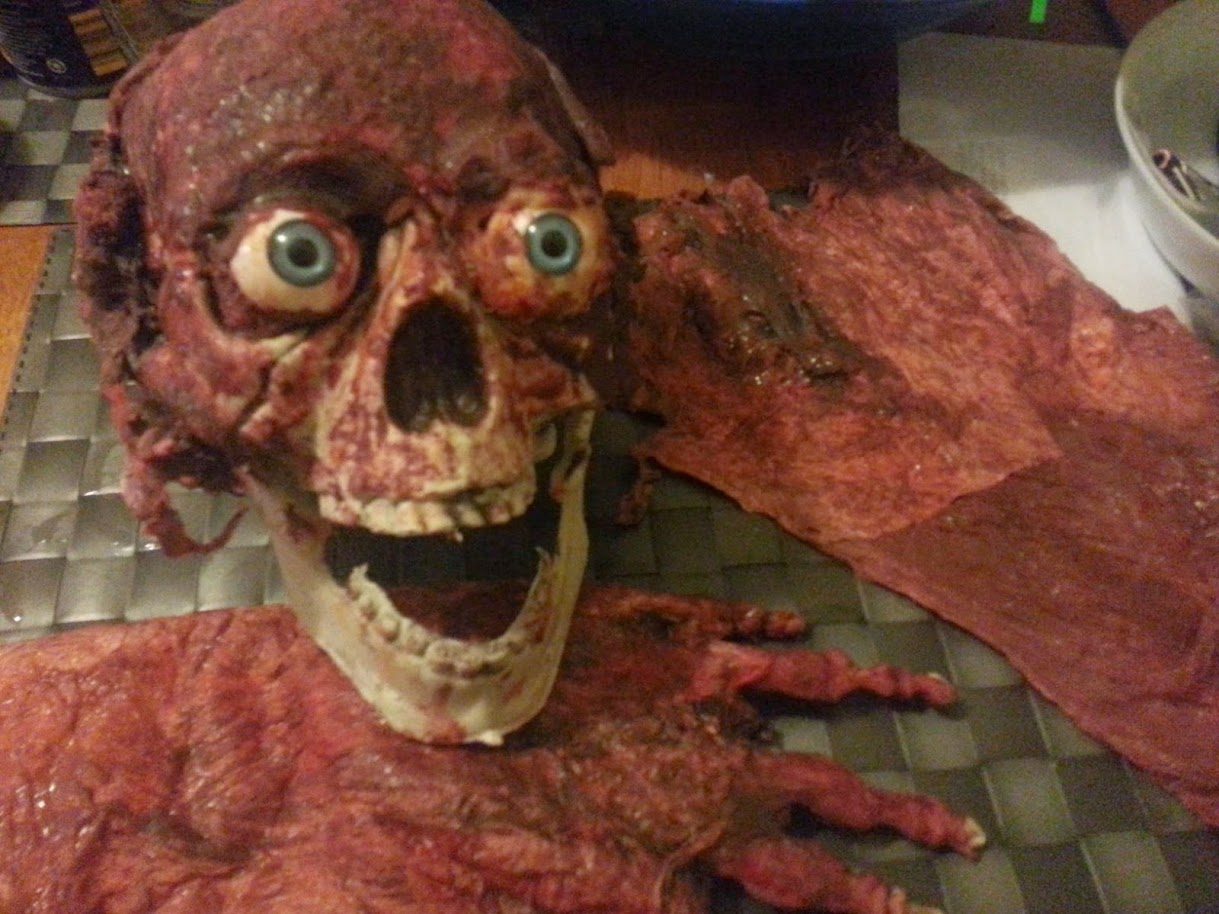
This applies to blood placement, makeup, damaged costumes, distressed props and creature movement. You are matching what the audience can see, including changes that happen during the action. The aim is a coherent sequence, not identical photographs of everything on set.
Divide the effect into story states
Give each meaningful condition a simple name. A sleeve might be CLEAN, FIRST CONTACT and SOAKED. A prop might be INTACT, OPEN and DAMAGED.
Attach those states to the shot list. If a close-up takes place after first contact, it needs that state even when you shoot it before the wider action. Clearly named states make the conversation faster than “the version with a bit of blood, before the other thing happens.”
Avoid unnecessary stages. Record changes that affect the image or the ability to reset. A barely visible variation may not justify another costume, while a large transfer across a pale sleeve probably will.
Record placement and behaviour
Take reference photographs with clear labels. Include a useful overall view and a closer view of the important detail. Record performer orientation so left and right do not become a guessing game.
A still cannot capture timing. For a moving effect, keep a short reference recording and note the cue, starting position, movement and end position. If a hand reaches for a prop, the side it grips and the direction it turns may matter more than a tiny surface mark.
Splatter VHS includes on-set and low-budget effects planning within its practical FX work. Continuity belongs in that planning because the effect has to fit the sequence the production intends to shoot.
Build a usable reset record
Keep the record brief enough to consult between takes. For each effect, include:
- Shot and story-state name.
- Reference photograph or clip.
- Starting placement and amount, where relevant.
- Performer and operator cues.
- Changes caused by the action.
- Steps and time required to reset.
- Replacement items needed if a reset is impossible.
Assign someone to confirm the state before the camera rolls. On a small crew, that may be the effects person working with whoever tracks continuity. Make the responsibility explicit so everyone does not assume someone else checked.
Worked example: a hand leaves blood on a sleeve
The scene begins with a clean sleeve. A character grabs it with a bloodied hand. The next shot shows the mark.
Record the hand’s approved appearance, the grip position and the resulting transfer. Test the action using the intended fabric and appropriate fake blood. The fake blood camera test guide covers the appearance and transfer checks.
You now have three filming needs: the clean sleeve before contact, the action producing the mark, and the sleeve after contact. Decide which can be reset and which need duplicates. Allow for failed transfers and additional takes when estimating supplies.
Shoot a short rehearsal reference. It will reveal whether the next camera angle can see the mark and whether the performer’s movement naturally lands in the same place.
Protect the edit without freezing the performance
Identify the details that the cut relies on. Those are your continuity priorities. Allow natural variation elsewhere when it does not damage the scene.
A creature’s arm entering frame might need a consistent starting side and cue. Its smallest finger movement may not need an exact match. Write down the difference so a performer has a clear target.
Build reset time into the schedule and short-film production plan. Check the effect again after camera or lighting changes, especially if a previously hidden area becomes visible. A good continuity record saves decisions for the moments that need them, instead of making the crew reconstruct yesterday’s bloody sleeve from memory.
Practise with a cursed invitation
Make three paper versions: an ordinary invitation, a changed message and an aftermath. Give each a stable ID. Photograph them in story order, then write a practical shooting order. The changes should stay intelligible even when the images were made out of sequence.