Body horror becomes a story when a physical change alters what a character can do, what they want and what they are willing to sacrifice. Give the transformation a rule, put that rule under pressure and let its consequences reach beyond the wound. The reader needs somebody to follow through the horrible shit.
An unpleasant image can open a scene. It cannot make every decision afterwards.
Begin with a pressure the character already lives under
Ask what the character is trying to protect, escape or obtain before anything changes. Work, intimacy, privacy and belonging can all put pressure on a body without making the character merely a collection of symptoms.
The transformation then enters an existing conflict. Someone desperate to remain unnoticed develops a change they cannot conceal. Someone whose hands earn their living discovers that using them accelerates the damage.
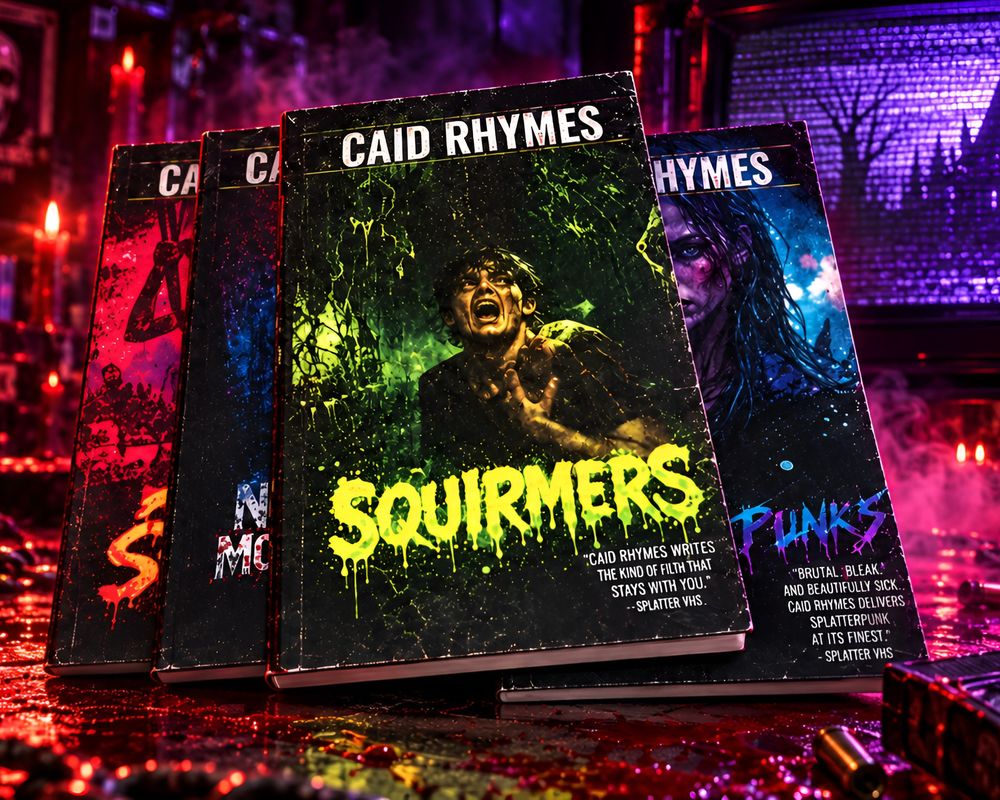
On the Splatter VHS books page, Caid Rhymes's released 2022 novella Slug Girl is presented as splatterpunk romance. Its mistreated protagonist, Melle, seeks escape, with a glowing meteorite connected to companionship and vengeance. That premise connects the strange with emotional need. The exercise below develops a different, invented situation.
Write a rule that can cause a decision
“A body mutates” leaves you almost unlimited options, which can make escalation arbitrary.
Try a rule with a trigger and a consequence: whenever a character lies, a new mouth opens somewhere on their skin. Now a conversation can do physical damage. Telling the truth may be dangerous for a different reason.
You do not need to explain the entire mechanism immediately. You need enough consistency that choices matter. If every inconvenience produces a new power, readers may stop worrying about the limits.
Keep a private record of what triggers the change, what slows it and what the character believes about it. Their belief can be wrong. Make the distinction clear in your own notes.
Escalate what the change costs
Bigger wounds are only one form of escalation.
A small change can first disrupt a routine, then expose a secret, then threaten a relationship. The body may become harder to hide while the character becomes better at using it.
Give them actions between discoveries. They test, conceal, negotiate, exploit or refuse. Even a trapped character can make consequential choices about whom to trust and what information to share.
A useful revision question is: if you removed the transformation, would the scene unfold almost identically? If yes, bring its rule into the action. The branching horror story guide offers another way to test whether choices produce meaningfully different consequences.
Choose detail through the character
Description gets more specific when it follows attention.
A cook may notice that a changed fingertip cannot judge heat. A singer may measure a new throat sensation against familiar breathing habits. A person hiding a wound might care most about the stain creeping beyond their sleeve.
Select details that reveal function, sensation or a changing relationship. Constant maximum disgust can flatten the experience. Let an ordinary task make the next impossible detail legible.
When developing a creature or transformed body visually, the creature design guide can help connect shape to movement and practical limitations.
Exercise: the changed hand
Write a scene of roughly 400 words using this invented rule: a character's palm copies the texture of whatever it holds, but does not change back.
Give them a specific task involving another person. They must choose whether to touch something before the scene ends.
In the first pass, include:
- One familiar action made difficult.
- One attempt to test or conceal the change.
- One response from the other person.
- A decision with a consequence that survives the scene.
In revision, remove descriptions that repeat information. Make the final choice clear without explaining its meaning in a closing speech.
The next scene should inherit the result. That continuity gives the transformation weight. If you later move the story into film, comics or a game, the adaptation guide can help you preserve the choice while changing how the audience encounters it.
Choose the darker door deliberately
For a Halloween writing exercise, give a character a bodily change that interferes with an ordinary social task. Decide how much detail the audience needs. Use a clear content description when sharing the work, and keep this exercise distinct from the no-gore prop projects.