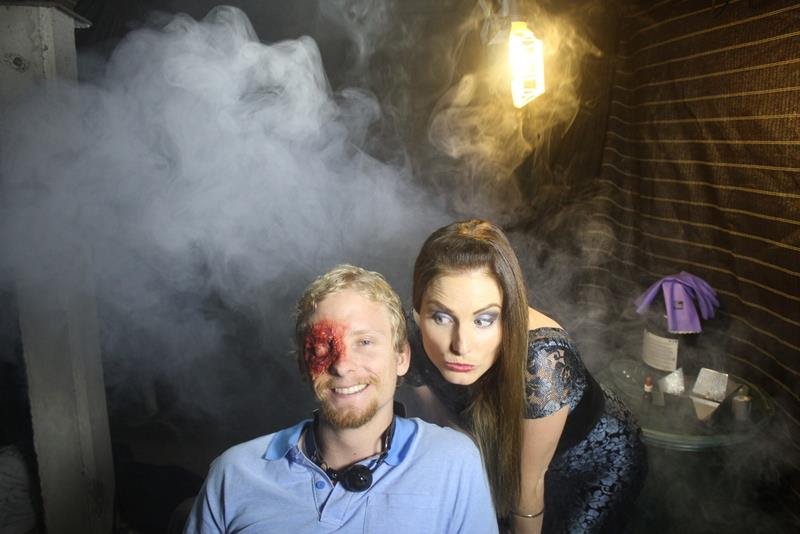
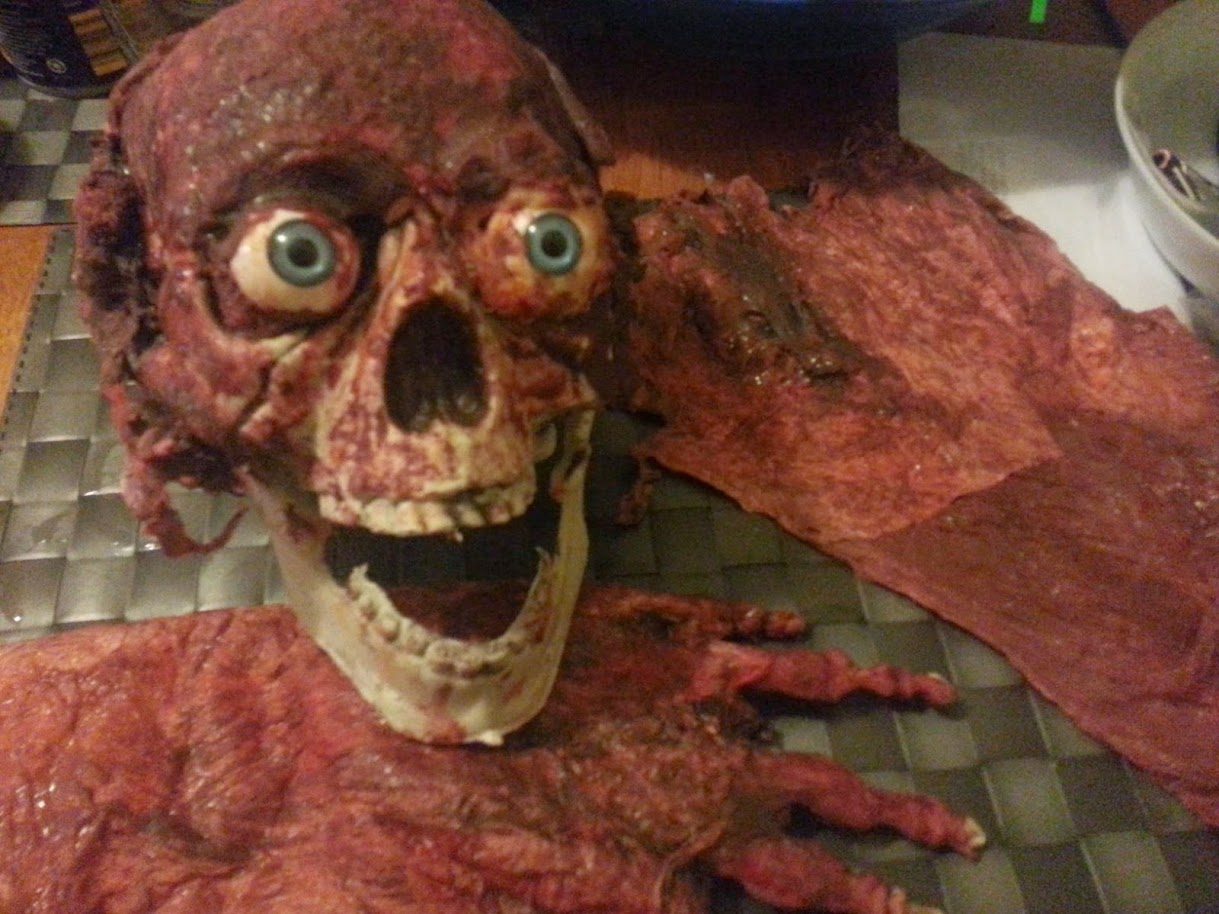
A low-budget horror creature needs a clear behaviour, a readable shape and a reveal you can actually film. Design those before adding surface detail. The audience must understand what the creature does and why its presence matters; they do not need to see every part of its anatomy.
Begin with the scene’s fear. Is the creature invading a familiar space, copying someone, blocking an escape or waiting where it should not fit? That choice gives the design a purpose. A collection of teeth, claws and slime is easy to imagine. A creature with a specific relationship to the character is more useful.
Give the creature one governing rule
Write a sentence describing how it behaves. For example: “It only approaches when the person turns away,” or “It rearranges itself to fit inside household storage.” These are fictional design prompts, not finished stories.
The rule helps you choose a body. A creature that squeezes through gaps may need a compressible silhouette or a suggestion of changing shape. One that imitates a person might depend on timing, posture and an almost-correct outline.
Keep the rule consistent enough for the viewer to notice. You can break it later for a deliberate story reason, but a creature that does anything at any time is difficult to anticipate. Anticipation gives a simple build somewhere to work.
Design the view the audience receives
List the creature’s appearances. For each, note the shot size, light, action and visible body area. A hand under a door and a full-body walk require very different resources.
Choose one signature feature that survives those conditions. It could be an uneven shoulder line, an unfamiliar joint position in a prop limb, or a head shape that interrupts a doorway. Do not rely on tiny markings if the creature spends most of its time in a wide shot.
Make a simple silhouette study. View it small, against the intended background, before refining the texture. If it resembles an ordinary coat on a chair, decide whether that ambiguity helps the scene or weakens it.
Build a performance plan
The performer and operator need to be part of the design. Write down the movement, visibility, access and communication the planned shot requires. Do not make restricted movement or discomfort the solution to an acting problem.
Test a lightweight stand-in or an ordinary garment arrangement before committing to a finished build. Rehearse the camera movement and the creature’s path. Check what the performer can comfortably repeat and what the frame actually captures.
Splatter VHS’s practical FX work spans creature makeup, creature builds and mechanical development. Those are different tools for a scene. Your creature may need only one of them.
Use this creature brief
Answer these questions on one page:
- What does the creature want in this scene?
- What behaviour makes the character notice it?
- What is its clearest silhouette feature?
- What is the closest the camera gets?
- Which body parts must move visibly?
- Who performs or operates each movement?
- What is the simplest version that proves the idea?
For a creature first seen through a frosted bathroom screen, the proof might be a distorted outline and one unsettling pause. Test that before constructing a detailed face the shot never reveals.
Spend detail where the camera spends time
Prioritise the feature that carries the reveal. Support it with enough finish that nearby surfaces belong together. A detailed head attached to an obviously unfinished neckline can undo the illusion when the performer turns.
Decide how much the audience learns in each appearance. The horror short-film planning guide can help organise that progression. Concealment works best when it controls information, rather than making every shot impossible to read.
Finally, give the creature an audible presence. A movement or pause can connect with a sound before the whole body appears. Use the horror sound design guide to plan that relationship. A coherent creature can occupy a scene long before it occupies the whole frame.
Give the Halloween creature a home
Place the design in a familiar seasonal task: guarding a bowl, hiding among decorations or waiting beside a packed-up party. Choose a behaviour before adding teeth. Try the same silhouette as curious, impatient and predatory, then compare what changed.